




Benefits of Professional Tile and Grout Cleaning

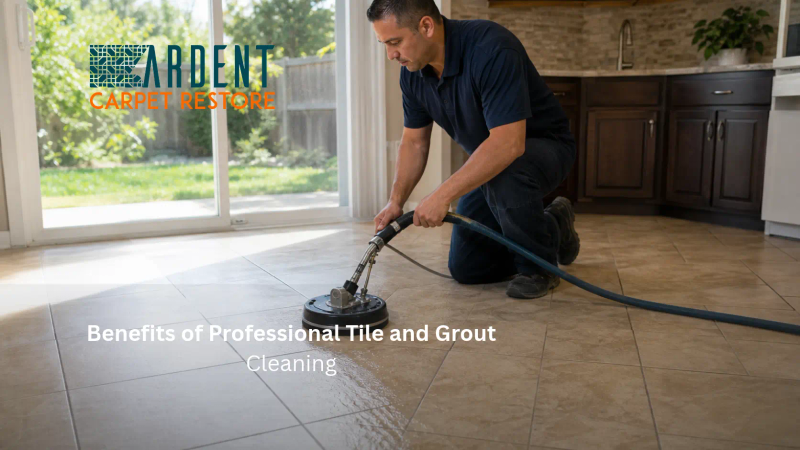
The benefits of professional tile and grout cleaning come down to three results: grout that returns close to its original color, soil pulled from pores a mop can't reach, and a sealer that helps the surface resist the next spill. What most homeowners miss is why the grout got dark in the first place. Often it's the weekly mop, which stops cleaning after its first dunk and starts spreading soil into the grout. And on travertine, marble, or limestone, the cleaner you grab to fix it can cause damage no amount of scrubbing will reverse.
How Do Professionals Clean Tile and Grout?
At home, cleaning tile usually means a stronger product and more elbow grease. A professional clean works more like a controlled wash and rinse.

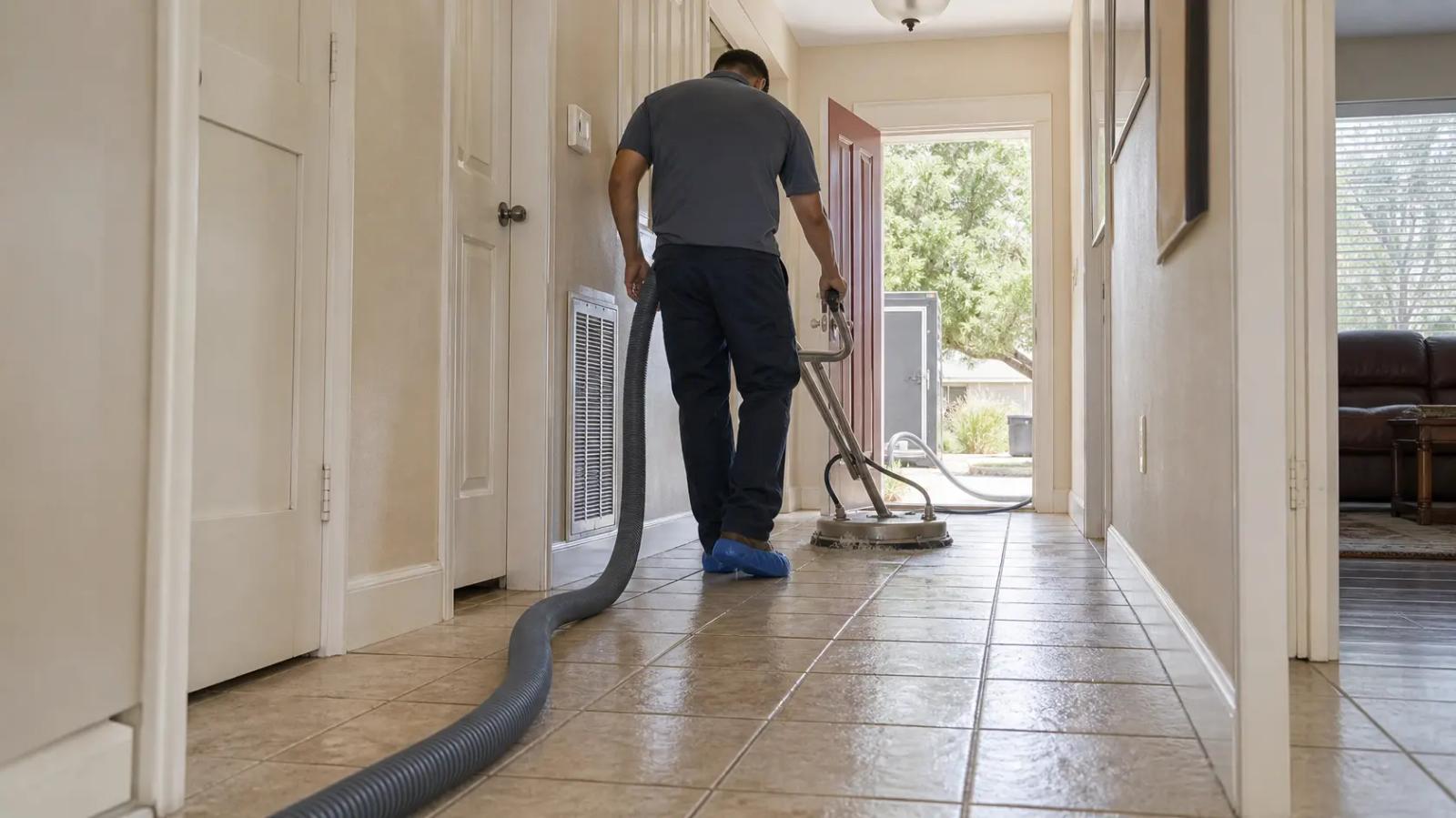
A careful technician works through your floor in manageable sections. At Ardent Carpet Restore, that's Vincent Adams, who removes dry soil first with a dust mop, broom, or vacuum, because wet dust turns into mud. He masks off anything nearby that the products could affect. Then he applies cleaning agents engineered for the specific surface, ranging from acidic to neutral to alkaline, and works them in by hand or with a brush along the grout lines. Some materials can't take aggressive scrubbing, so agitation is adjusted to the surface instead of applied at full force everywhere.
The step that separates professional tile cleaning from anything you can rent is the rinse. A spinning tool sprays high-pressure soft water across the surface while a truck-mounted vacuum pulls that water, and everything suspended in it, back out of the grout. Nothing is left on the floor to dry into a film, so it doesn't feel tacky underfoot or pull dirt back in a week later.
If the floor still isn't where it should be, a restorative stage follows, using acids, neutralization, and a second rinse. Then the surface is toweled and dried with air movers, and once it's dry, a sealer suited to the material goes on.
Every step of Ardent's tile and grout cleaning service adapts to the floor in front of it. It matters because the right cleaning for porcelain can damage travertine. The benefits below depend on who does the work.
What Are the Benefits of Professional Tile and Grout Cleaning?
Grout returns close to its original color
Grout is porous. Every spill, every mop pass, and every bit of tracked-in grit has somewhere to settle, and over a few years the lines darken from light gray or beige to nearly brown. It's easy to assume the grout has simply aged. Usually it hasn't. The original color is still there under the soil.
A thorough cleaning that pulls dirt and grime out of the grout, instead of scrubbing across the top of it, is often enough to bring those lines back close to new. On a kitchen floor, that's the difference between a room you apologize for and one you stop noticing, in the good way.
Deep extraction removes trapped soil and mildew from grout
Mopping cleans the face of the tile. It rarely reaches deep into the grout lines, where soil and dried soap residue build up layer by layer. In bathrooms and kitchens, damp, dirty grout also gives mildew a place to settle.
High-pressure extraction is built for exactly that problem. It pulls the residue out of the house instead of spreading it around. Cleaning tile alone won't fix a home's indoor air quality, and anyone promising that is overselling. It does remove the buildup that makes a bathroom smell stale right after you've cleaned it, and take away the places where mildew and bacteria hold on.
Sealing helps tile and grout resist new stains
Cleaning resets the floor. Sealing helps it stay reset. On ceramic and porcelain, the grout lines are sealed. On natural stone, the sealer goes over the whole surface.
Be wary of anyone who tells you a grout sealer makes your floor stain proof. It makes it stain resistant, which means a spill sits on top long enough for you to wipe it up instead of soaking straight into the grout. That small window is the whole point.
Regular cleaning extends the life of your tile floor
Grit is abrasive. Left in place, it grinds at your tiles and grout with every footstep, and that wear and tear is what makes a perfectly sound floor start to look tired. Regular professional cleaning removes the grit before it does lasting damage, which helps extend the life of tile you've already paid for. Replacing a tile floor means demolition, dust, and weeks of disruption. Keeping the one you have well-maintained keeps the construction crew out of your kitchen.
Natural stone gets chemistry that won't etch it
Get this one wrong and the damage is permanent.
Marble, travertine, and limestone are calcareous stones, made mostly of calcium carbonate. The Natural Stone Institute notes that calcareous stone is sensitive to acids and recommends mild, non-acidic cleaners for it, since products containing lemon, vinegar, or other acids can dull or etch the surface. Plenty of popular grout and bathroom products are acidic. A homeowner trying to brighten travertine grout with one of them can end up with dull, etched patches on the stone around it.
Vincent is certified by the IICRC for Stone, Masonry, and Ceramic Tile Cleaning, and that training shows up in choices you never see, like the temperature of the rinse water. Hot water can damage and even begin dissolving certain stones. Many cleaning companies lead with steam cleaning. On a stone floor, the method that sounds most powerful can be the one that dulls it.
Is Professional Tile Cleaning Better Than DIY?
DIY isn't useless. For routine cleaning between professional visits, a dust mop and a neutral cleaner do real work. The trouble starts when a homeowner tries to fix a problem that's already set into the grout with tools built for daily upkeep.

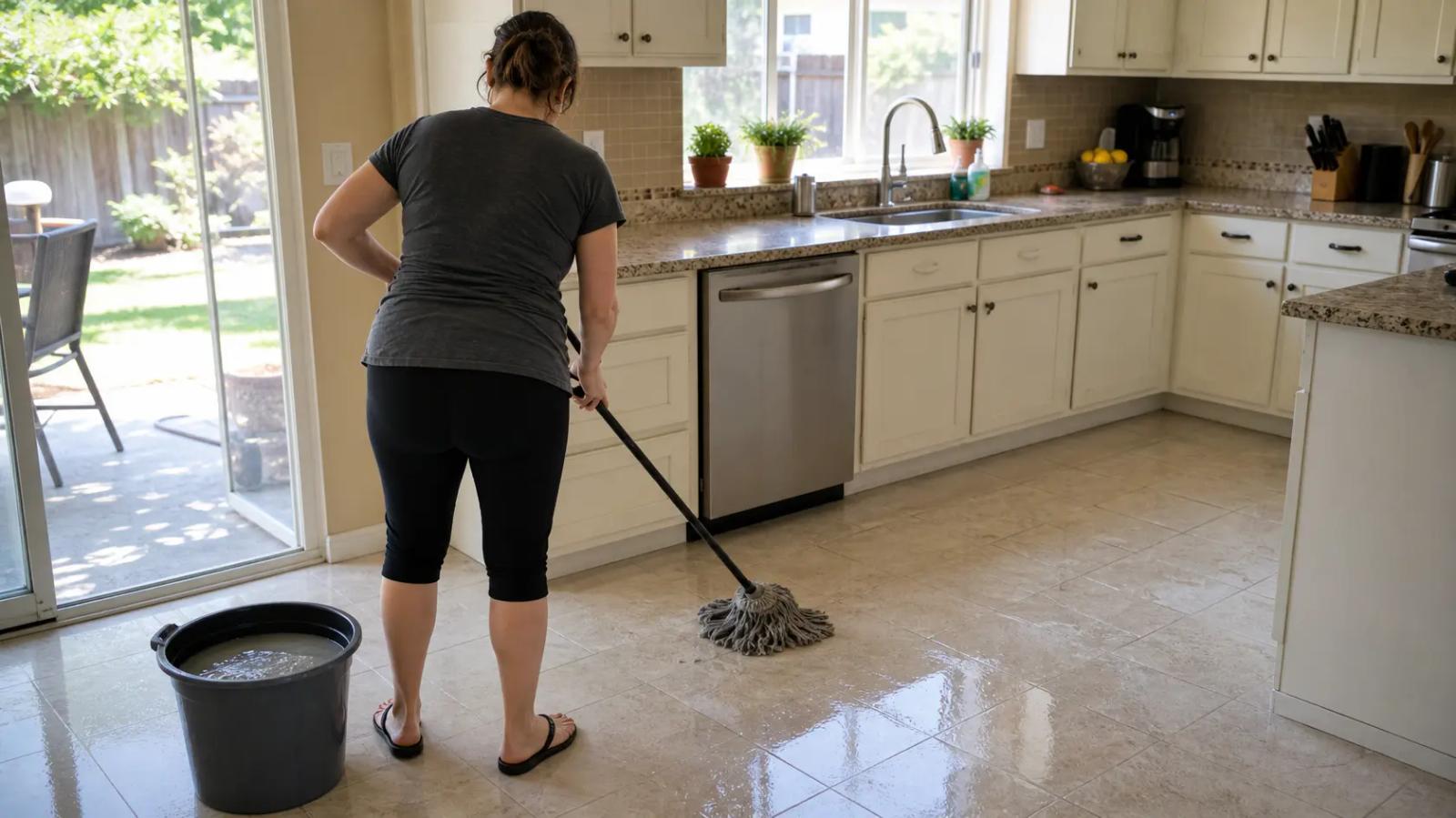
Start with the mop. It's only clean on its first dunk. After that, every pass spreads diluted soil back across the floor, and the leftover cleaner dries in the grout and along the baseboards, where it attracts more dirt. The harder you mop a dirty floor, the faster that cycle runs.
Chemistry makes it worse. When scrubbing doesn't work, the instinct is to reach for something stronger. The damage usually comes from acidic cleaners on stone or abrasive powders that scratch the finish. A bottle from the hardware store doesn't know what your floor is made of.
Even a perfect scrub leaves one problem unsolved: getting the dirty water back out. You can scrub grout on your hands and knees for an afternoon and loosen a lot of soil. Without extraction, most of it settles right back into the pores as it dries.
The case for professional help comes down to this. It isn't that you can't scrub. It's that scrubbing alone moves dirt around without removing it.
Is Professional Tile and Grout Cleaning Worth It?
For the right floor, yes. For some floors, honestly, no.
When professional grout cleaning is worth paying for
It's worth it when your grout has darkened over the years and mopping no longer changes it. With natural stone like travertine or marble, it's safer than gambling on the wrong product. Selling a home? Floors are among the first things buyers judge. And if you want fresh sealer, the grout has to be clean first, because sealing over dirt locks it in.
It holds for commercial floors too. Ardent cleaned and sealed the travertine in a community clubhouse bathroom, a space where public foot traffic and everyday mopping had driven soil into the stone and grout far faster than any home bathroom would.
When grout needs repair instead of cleaning
Cleaning removes soil. It doesn't rebuild grout. If your grout is cracked, crumbling, or missing, it needs repair or regrouting first. If the dirt is light and comes up with a soft brush and a neutral cleaner, you don't need a professional yet. If you hire a professional in either situation, you're paying for a result the service can't deliver, and an honest technician will tell you that before you book.
How tile and grout cleaning is priced
Every job is quoted per square foot. The final number depends on the size of the area, the type of tile or stone, how heavily soiled it is, how much furniture needs to move, and whether you want it sealed. At Ardent, projects start with a $300 minimum setup fee, and most land in the four figures. Plan for it like any other home project.
Each project starts with a free consultation, available within 20 miles, where the area is measured and assessed before anything is scheduled. Jobs run from half a day to multiple days depending on size and material, and the area needs to be cleared of furniture first. Because one technician handles every job, it's worth planning ahead, especially before a sale or a family event. The full breakdown of tile and grout cleaning cost walks through each of those factors and how they move the price.
How Often Should Tile and Grout Be Professionally Cleaned?
There's no single schedule that fits every floor, and any fixed number you read online is a starting guess. The better approach is to read your own floor.

What affects how often grout needs cleaning
Traffic is the biggest factor. An entryway, kitchen, or hallway that sees constant foot traffic loads up with grit far faster than a guest bathroom. Room type matters too: kitchens collect grease and food, while bathrooms deal with moisture and soap residue. Pets and kids add tracked-in dirt and spills. Sealed grout also holds up longer between cleanings than unsealed grout, because less of what lands on it soaks in.
Signs your tile is ready for a professional clean
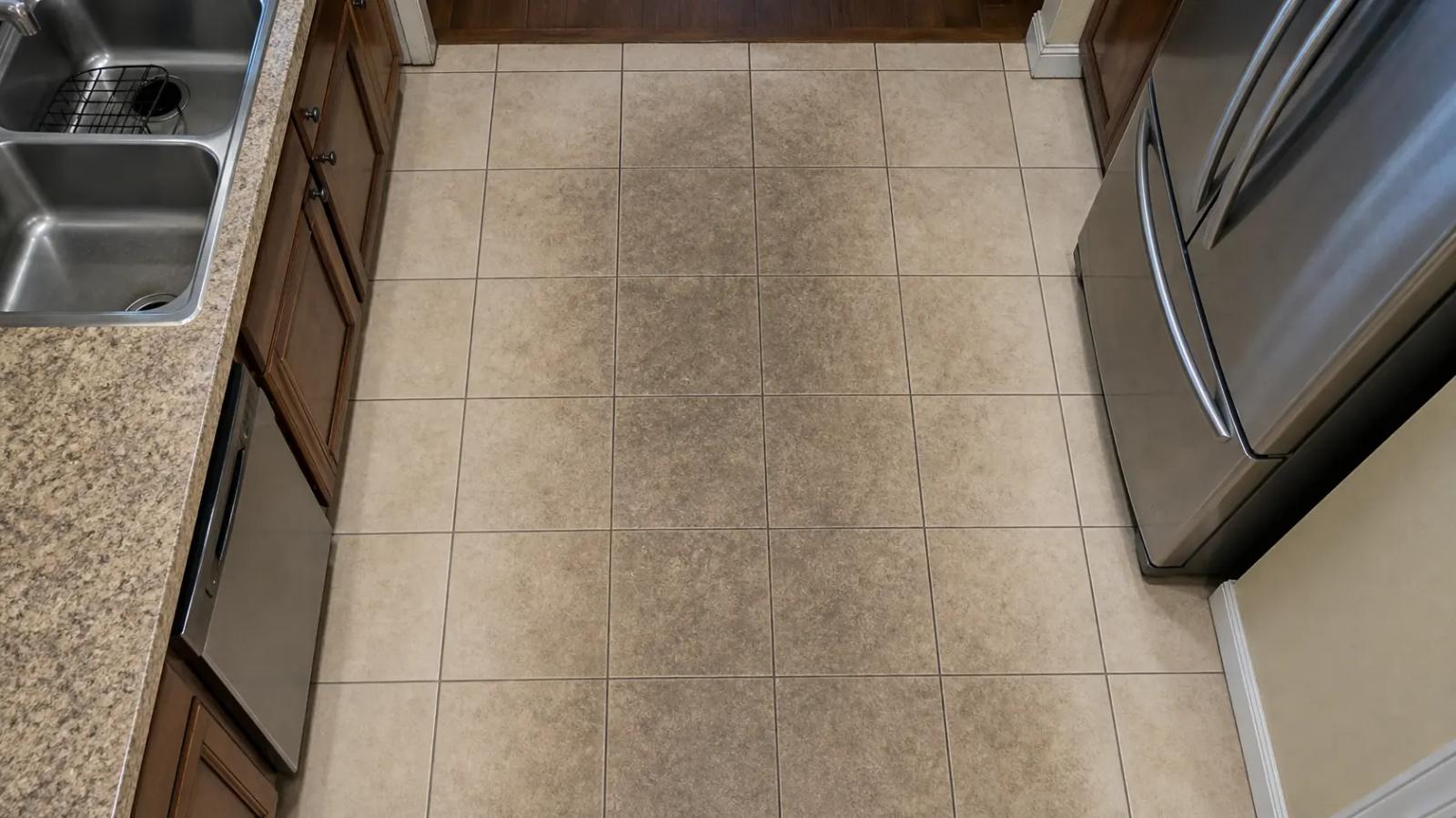
Your grout looks noticeably darker than the tile around it, or darker in the walkways than in the corners. Mopping leaves a dull film instead of a clean finish. Odors linger in the bathroom even after a full clean. Or water soaks into the grout instead of beading on top, which usually means whatever sealer was there has worn off. Any one of those is a reasonable cue to have the floor assessed.
How to keep tile clean between professional cleanings
Dust mop or vacuum before you mop, so loose grit gets lifted instead of turned into mud. Use a neutral cleaning solution and keep it light, since too much soap leaves a film that holds dirt. Change your rinse water often, because a mop in dirty water just redistributes the floor. Wipe up spills before they soak into the grout. Moisture is what lets mildew take hold, so run the exhaust fan when you shower. The EPA recommends keeping indoor humidity below 60%, ideally between 30% and 50%. None of this replaces a deep clean, but it stretches the time between them.
Frequently Asked Questions
Book a Free Tile and Grout Consultation in Sacramento
You probably have a specific floor in mind already. Maybe it's a kitchen where the grout has gone from beige to brown, or a travertine bathroom you're nervous to touch with anything stronger than water.
The fastest way to know whether a professional clean is worth it for your tiles and grout is to have them looked at by someone certified to clean tile and stone. Vincent Adams is the owner and only technician at Ardent Carpet Restore, an IICRC-certified firm best known for carpet cleaning across greater Sacramento. He handles every tile and grout job himself, from the free consultation to the final coat of sealer, with no subcontractors in between.
Your free consultation tells you exactly what your floor needs before you spend a dollar on cleaning it.