




How to Repair Carpet Damage by Pets: Scratches, Chewing & Torn Patches

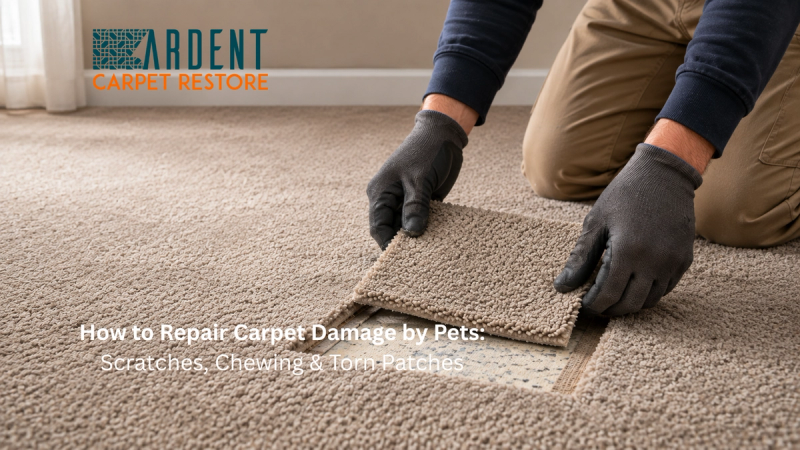
Most homeowners assume a pet-shredded carpet means burning through thousands of dollars on full-room replacement, but that impulse decision often wastes money on damage that takes less than an hour to fix. In reality, whether your carpet is actually ruined comes down to knowing which type of damage your pet caused and matching it to the exact fix required to make it disappear.
Identify the Damage Type First
The repair method changes based on the damage, so figure out what you are dealing with before touching any tools.
| Damage Type | What It Looks Like | Typical Cause | Repair Approach |
|---|---|---|---|
Surface fraying | Yarn flattened or frayed, backing intact | Digging or scratching | Trim and blend |
Pulled loops | Single loop snagged above surface | Cat snagging loop pile | Re-tuck and anchor |
Torn or shredded sections | Fibers torn or missing, backing partially intact | Dog scratching at doors | Adhesive or patch |
Holes chewed through | Damage goes through backing to pad or subfloor | Puppy teething, anxiety | Cut and patch |
Ripples and buckling | Carpet pulled loose, forming waves | Running, jumping, digging | Power restretch |
Fixing Cat-Scratched Carpet
Cat scratching is the most common pet carpet damage. It happens near doorways, at the bottom of stairs, and along transition strips where carpet meets hard flooring.
Pulled Loops in Berber and Loop Pile
When a cat snags a loop-pile carpet, it pulls one continuous strand of yarn up and out. Pulling or cutting that loop makes the run unravel further across the row.
If the yarn has not broken, you can often save the area. Use a curved needle or latch hook to gently pull the loop back down through the backing to the underside. If the loop is too short to reach the back, push it below the surface line so it sits even with surrounding loops, then secure it from underneath with a small dab of latex seam adhesive.
If excess yarn has bunched on the back side, trim it leaving about half an inch and anchor the end so it cannot pull through again.
Never cut a pulled loop flush with the surface. That severs the continuous yarn and turns a fixable snag into a spreading run that ruins the row. If the yarn has already broken, re-weaving with matching yarn is a specialized job best left to a technician.
Shredded Edges Near Doorways
Cats often shred carpet right at the threshold. The edge fibers tear and the backing separates from the transition strip.
Trim any loose, shredded fibers flush with sharp scissors. Do not pull them out, since that weakens what is left. Run a thin bead of carpet seam adhesive along the exposed backing edge to stop further separation, then press the remaining fibers down into the adhesive while it is still tacky.
If the edge has pulled away from the transition strip entirely, re-secure it with a new tack strip or transition molding. For damage spanning more than a few inches, replacing that section with a matched remnant gives a cleaner result than repeated patching.
Cat Damage on Stairs
Stair edges are a prime target because the front lip of each step gives cats something to hook into, and the damage often exposes the backing or tackless strip underneath.
Minor edge damage can be trimmed and sealed with seam adhesive. But if the damage extends more than an inch back from the step nose, the step needs to be re-carpeted. A technician can pull fresh carpet from the overlap under the nosing or replace the step cap with a matching remnant. This is not a beginner DIY job. Each step must be individually re-tucked, and a mistake is visible every time you walk upstairs.
Repairing Dog-Chewed or Torn Carpet
Dogs chew for several reasons: teething, boredom, anxiety, or a reaction to a smell trapped in the fibers. The damage usually goes deeper than cat scratching, often straight through the backing.
Small Tears and Frayed Spots
If the backing is still solid, you can usually save the area. Vacuum thoroughly to remove loose fibers and debris, then trim any stray or matted fibers so the damaged spot is clean and even.
If fibers have pulled away from the backing but are still attached at the base, apply carpet adhesive to the backing and press the fibers back into position. Hold until set, then blend the area with the surrounding pile using a carpet rake or stiff brush so the fix disappears from standing height.
Holes Chewed Through the Carpet
When a dog has chewed through to the pad or subfloor, patching is the fix. You will need a utility knife or patch tool, double-sided carpet tape or adhesive, a matching replacement piece (sources below), and a seam roller or heavy flat weight.
Mark the damaged area with a straight edge and cut it out cleanly, going all the way through the backing and cutting in the same direction as the fiber pile. Remove the damaged piece and clean the exposed pad. If the pad is also damaged, cut a matching replacement and adhere it to the subfloor.
Apply carpet tape or adhesive around the perimeter of the cutout, then press the replacement patch into the opening. Pay attention to pile direction. If the yarn leans the wrong way, the patch stands out under any lighting. Match the surrounding pile, roll the seam flat, blend the edges by brushing fibers across the seam line, and let the adhesive cure for 24 hours before vacuuming or heavy foot traffic.
Where to Get Matching Carpet
You need an exact match in color, fiber type, and pile height. Check these sources first:
- Closet carpet: Same dye lot and age as the damaged area. Cut from a back corner where the gap will not show.
- Leftover installation remnant: Exact original material, if you or the previous owner kept the roll.
- Behind large furniture: Hidden carpet can sometimes be sacrificed, though it may have faded unevenly.
- Under floor heat registers: Scrap is often tucked beneath vent openings, but supply is limited.
Do not buy "close enough" carpet from a store. A slightly different shade or pile height will be obvious from across the room.
Patching vs. Re-stretching
Pet activity causes two structural problems that homeowners often confuse, and they need completely different fixes.
| Situation | What Is Happening | What To Do |
|---|---|---|
Fibers torn, shredded, chewed, or stained | Localized surface or backing damage | Patch the section |
Ripples, waves, or buckles | Carpet stretched loose from tack strip | Restretch with a power stretcher |
Hole chewed through plus surrounding ripples | Both problems at once | Patch first, then restretch |
Restretching pulls the carpet tight and re-secures it to the tack strip; no carpet is removed. Room-wide ripples require a power stretcher that anchors against the opposite wall, and most homeowners do not own one. Professional carpet restretching is the practical option for ripples covering more than a few square feet, since a botched DIY stretch with a knee kicker usually brings the wrinkles back within weeks.
Repair or Replace?
Not every piece of pet-damaged carpet is worth saving. The decision comes down to extent, carpet age, and whether you can source matching material.
| Factor | Repair | Replace |
|---|---|---|
Extent of damage | one or two localized spots | Large area or multiple rooms |
Carpet condition | Years of life remaining | Near end of lifespan (15 to 20 years) |
Matching material | Remnant or closet piece available | Styled discontinued |
Urine contamination | Surface or pad-level only | Soaked through pad into subfloor |
Previous repairs | No existing patches | Multiple patches already present |
A skilled repair costs a fraction of replacement and can extend carpet life by years. For urine and odor issues that go beyond physical damage, the problem usually lives in the pad and subfloor where bacteria settle. Residential carpet cleaning focused on pet contamination resolves odor at the source, and combining that treatment with a patch or restretch often costs far less than full replacement.
DIY Mistakes to Avoid
- Cutting Berber snags: If you take one thing from the Berber section above, take that warning. Cutting the loop is the one mistake you cannot walk back.
- Reaching for household superglue or hot glue: Standard store adhesives harden into a stiff, permanent plastic clump. You need carpet seam adhesive. It remains flexible when dry and anchors to the backing without creating a crunchy spot underfoot.
- Ignoring pile direction: Match the lean of the surrounding yarn before you set the patch. The mechanics are in the patching steps above.
- Cutting square patches in open areas: The human eye immediately registers geometric shapes against uniform textures. Use a circular patch tool for small repairs in high-visibility areas so the seams blend into the surrounding pile.
Avoid generic all-in-one repair kits: Some kits use thick adhesive discs that can leave a noticeable ridge under the carpet, especially on low-pile styles. For a flatter repair, use a carpet adhesive or seam tape appropriate for the carpet and backing.
When to Call a Professional
Some repairs are realistic for a confident DIYer. Others turn out better with a technician who has the tools, material sources, and experience across carpet styles.
It is worth getting a professional opinion when:
- The damage is in a highly visible area and the repair must be invisible
- Berber loops have unravelled across multiple rows
- The carpet needs restretching and you do not have a power stretcher
- You cannot source matching material locally
- Multiple types of damage overlap (chewing, ripples, and odor together)
For Sacramento-area homeowners, a free on-site inspection takes the guesswork out of the repair-versus-replace decision. A certified technician (ideally IICRC-trained) can tell you whether the carpet is salvageable and handle the patch or restretch in one visit. If pet odor is part of the problem, ask about bundling odor treatment with the physical repair so you are not scheduling two separate services.
Preventing Future Damage
Fixing the carpet buys you a fresh start, but keeping it that way requires addressing the habits that caused the damage in the first place. Long, sharp claws are responsible for most pulled loops and frayed edges, so keep nails trimmed every three to four weeks. If your cat resists clippers, soft vinyl claw caps offer an effective alternative.
For cats targeting doorway thresholds, place a tall sisal post or cardboard scratcher directly over or next to their preferred spot. Dogs usually chew carpet out of boredom, teething discomfort, or separation anxiety. Redirecting that energy toward frozen puzzle toys or crate training prevents destructive habits, though persistent chewing might warrant a quick check-in with a vet or trainer. Finally, never underestimate the power of a simple pet gate. Blocking access to problem rooms remains the easiest way to avoid a second repair bill.