




How Much Does Carpet Stretching Cost in Sacramento?

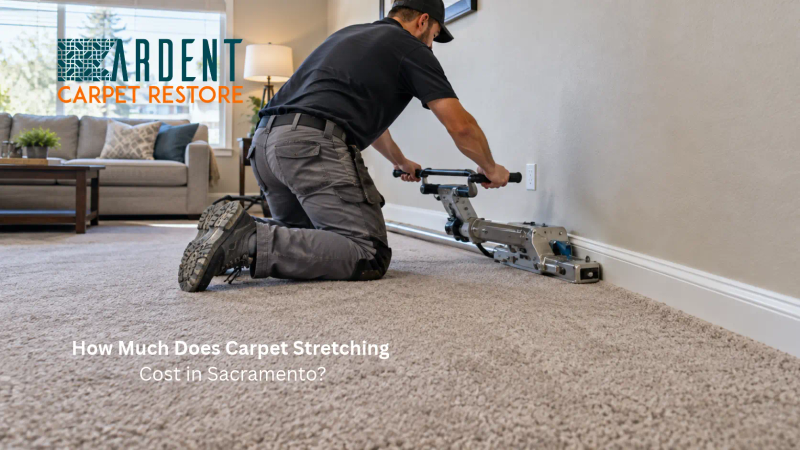
Carpet stretching in Sacramento typically costs $100 to $300 per room. That's the number most people want when they ask how much does carpet stretching cost. The number that decides your bill is buried in details most homeowners never think to ask about: how many seams need to be opened, whether the carpet has already started to delaminate, and whether the company doing the work owns a real power stretcher or is stretching your floor with a knee kicker on a job that needed the proper tool.
What Affects the Cost of Carpet Stretching
Carpet stretching cost depends less on the square footage of a room and more on what's happening underneath it. A technician pricing a straightforward room with no furniture and no seam work is quoting a completely different job than one working around a full bedroom set, a hallway with three doorway transitions, or a carpet that's been loose long enough to fray at the edges.
Room size is the starting point. Furniture is the variable most homeowners underestimate. Moving a bed frame, a bookshelf, or an entertainment center out of the way adds labor time, and it's usually billed separately from the base cost. Stairs and hallways run more per square foot than an open room, since the installer has to work a power stretcher around tight corners and doorway transitions instead of one open span.
Then there's the carpet itself. A carpet that's simply loose from age or normal foot traffic is the cheapest scenario to fix. A carpet with a damaged tack strip, past water damage, or a subfloor that's shifted is a different job, and it usually means repair cost on top of the stretching before the room is finished.
How Much Does Carpet Stretching Cost by Room?
Here's roughly what carpet stretching runs across the Sacramento area, based on typical pricing from local carpet repair companies:
| Scenario | Cost | What drives it | |
|---|---|---|---|
Single room (bedroom, living room) | $100 to $300 | Many companies charge a flat minimum around $300 regardless of square footage | |
Whole house (4 to 5 rooms) | $400 to $650 | Depends on total square footage and how many rooms connect through open doorways | |
Stairs and hallways | Add $75 to $150 | Cutting and resealing seams at each doorway transition instead of stretching the space as one continuous piece | |
Furniture moving | Add $25 to $75 per room | Applies if the space isn't cleared ahead of time | |
Subfloor or tack strip repair | Add $100 to $300 | Only needed if water damage or age has compromised what the carpet is anchored to |
Here's why a small room isn't automatically a small bill. The technician still has to travel to the property, inspect the carpet and subfloor, load and unload professional equipment, detach and reattach the carpet at the perimeter, operate a power stretcher, trim excess material, and clean up before leaving. That's the full job whether the room is 80 square feet or 300. Ardent Carpet Restore's starting fee for carpet re-stretching in the greater Sacramento area is $300, which sits at the higher end of the $100 to $300 planning range above rather than contradicting it. Square footage and existing damage move the total from there, which is why the numbers above are a planning range rather than a fixed price.

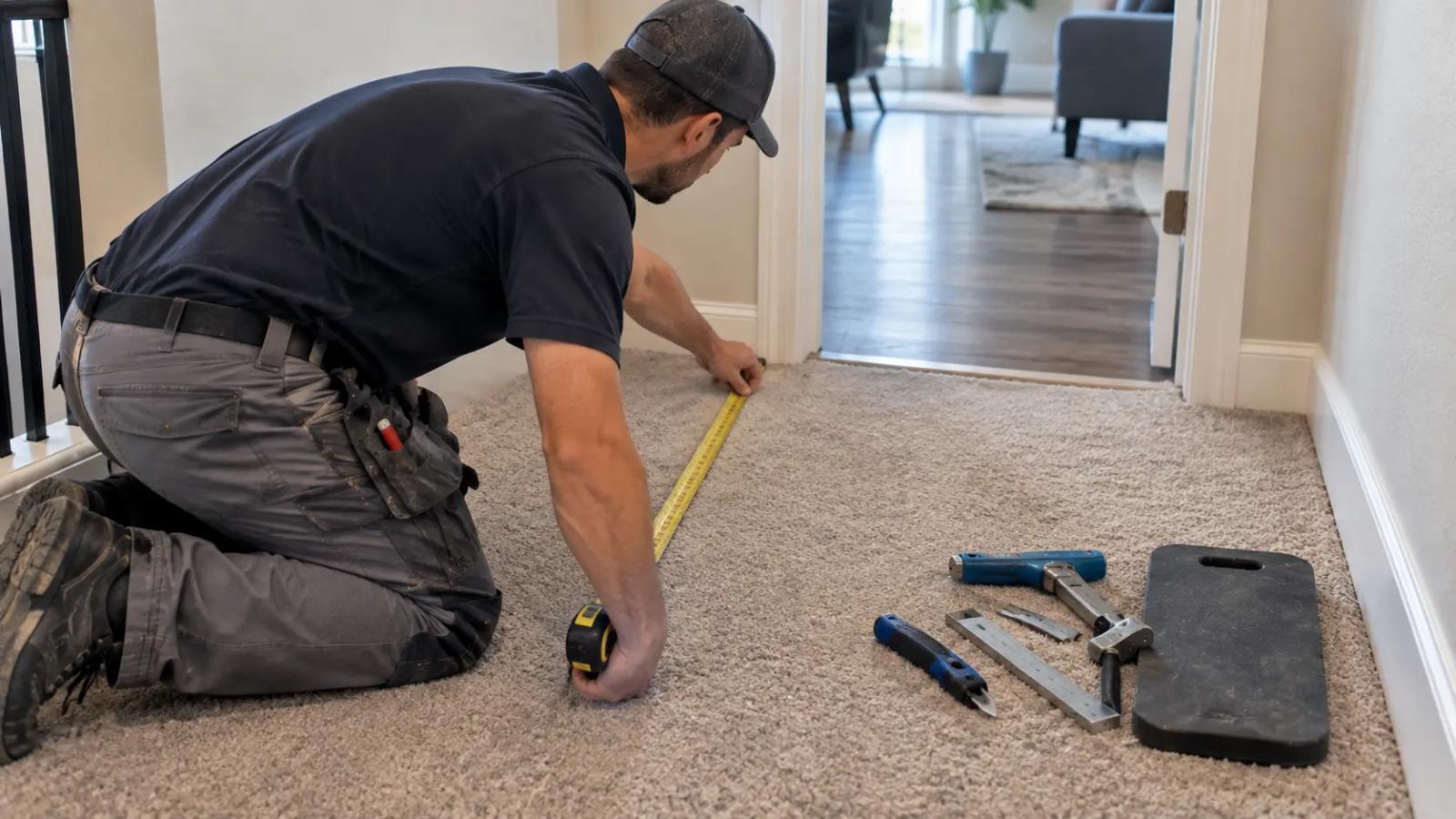
Who you hire for that assessment matters as much as the number itself. Ardent Carpet Restore states it has served Sacramento-area homeowners for more than 23 years, and owner Vincent Adams is identified by the company as an IICRC Master Textile Cleaner and Senior Carpet Inspector. Ardent offers carpet re-stretching, repair, and inspection services throughout Sacramento, Placer, El Dorado, Yolo, and parts of Solano County.
Why Does Berber Carpet Cost More to Stretch?
Not all carpet stretches the same way. Berber and other looped carpets are more prone to snagging and pattern misalignment mid-stretch because of their tight, looped construction, and many contractors charge a premium for the additional care this requires. The exact amount varies by carpet condition and how much correction the room needs. Older carpet carries its own premium too. Carpet that's been down for a decade or more has less give left in the backing, which means slower, more careful work to avoid tearing it during the stretch.
Can You Stretch Carpet Yourself?
Renting a power stretcher runs somewhere around $40 to $60 a day, which makes DIY carpet stretching look tempting on paper. In practice, it's one of the riskier repairs to attempt without experience. A knee kicker, the tool most DIYers reach for instead of a power stretcher, only pulls carpet a few inches at a time, and it's easy to leave wrinkles that return within months. Not exactly a lasting fix.

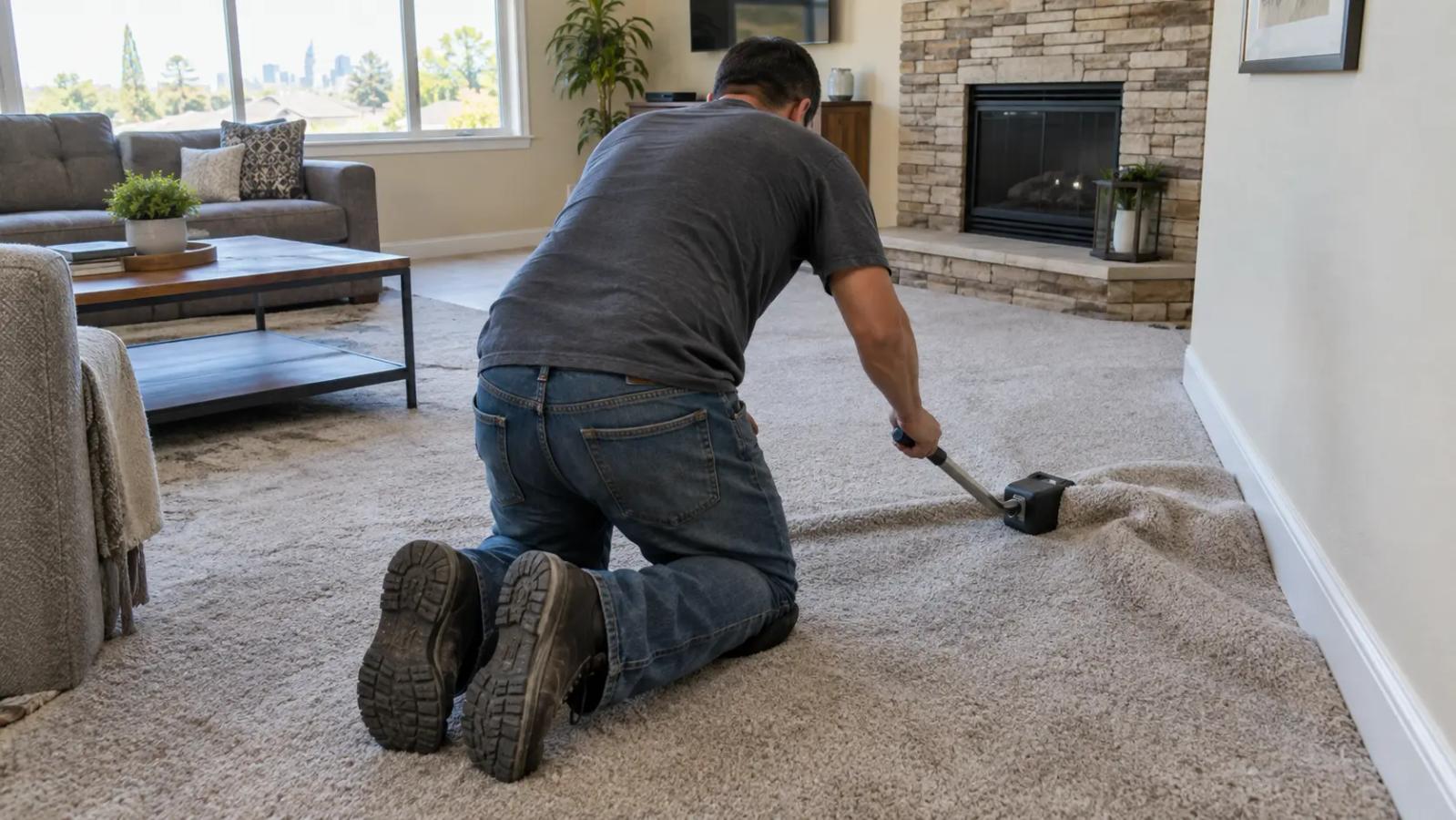
Professional carpet stretching uses a power stretcher across the full width of the room. For most wall-to-wall residential rooms, that gives more consistent tension than a knee kicker can manage, which is why it's the method carpet installation professionals rely on for correcting widespread ripples without damaging the backing or reopening seams. That's the difference between a wrinkle that's gone for good and one that reappears by winter. It's worth asking any company you're considering whether they'll actually be using a power stretcher for the job. Hiring a professional carpet stretching service also typically comes with a service guarantee, something a rented tool and a free Saturday can't offer.
How Do You Know If Your Carpet Needs Stretching?
Carpet buckles and wrinkles for a handful of predictable reasons: an original installation that skipped the proper stretch, seasonal indoor-environment changes across the Sac area, heavy furniture dragged instead of lifted, damaged tack strips, or delamination where the backing has separated from the fibers, which stretching alone may not fix since the carpet needs to be structurally intact for a stretch to hold. Pet damage near doorways and high-traffic edges is another common trigger, since scratching and pulling loosens carpet from the tack strip faster than ordinary wear does.
If you're seeing ripples along a wall, a bulge in the middle of a room, or carpet pulling away at a doorway transition, that's stretching territory, not a cleaning problem. None of this gets better with time. A ripple that's stepped on every day wears through at the peak faster than the rest of the carpet, and what starts as a straightforward stretch job can turn into a stretch-and-repair job if it's left long enough. One thing worth checking before you call anyone: if the wrinkles come with persistent dampness or a musty smell, that points to water damage that needs to be investigated before any stretching happens.
Is Carpet Stretching Worth It?
In most cases, yes, as long as the carpet itself is still in good shape. When the carpet and backing are still structurally sound, re-stretching can cost only a fraction of full replacement, which runs $2.50 to $5.00 per square foot once materials and installation are factored in.

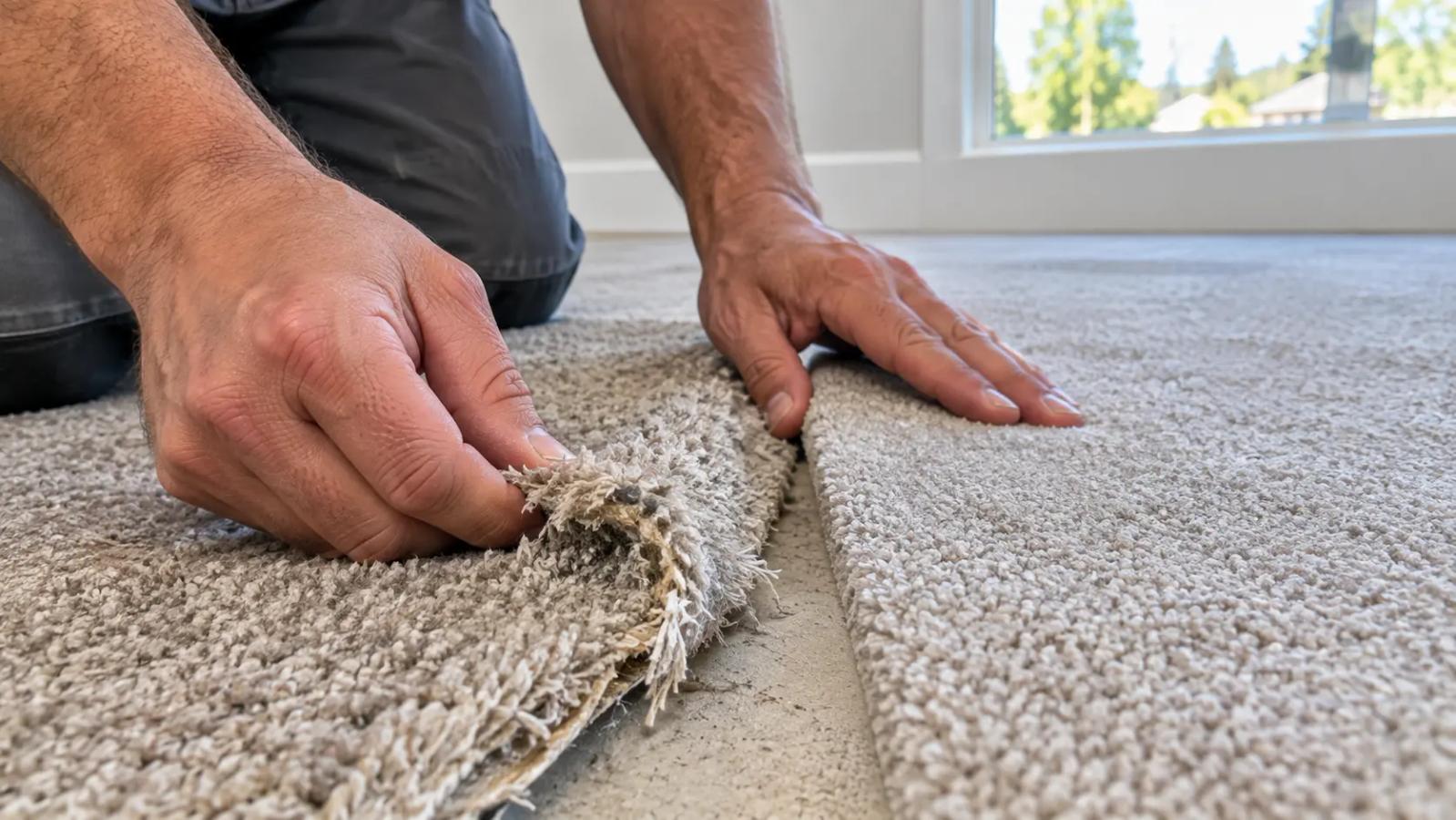
Stretching makes less sense when the carpet is badly worn, permanently stained, delaminated, or already near the end of its useful life. In those cases, the stretch is a temporary fix on a carpet that needs replacing anyway.
How Long Does Carpet Stretching Take?
A single room typically takes thirty minutes to an hour. A whole house runs closer to half a day, depending on how much furniture needs to move and how many seams need to be opened and resealed. A carpet repair company can usually give an accurate time estimate after seeing the space in person, since subfloor damage adds time a straightforward stretch doesn't need.
Getting an Accurate Quote
A flat number online is only a starting point. Knowing the real cost for your floor takes someone measuring the room, checking the condition of the existing carpet, and looking at what's happening at the tack strip before committing to a price.
If you're already this far into researching the cost, you're probably not deciding whether to fix the wrinkles. You're deciding who to trust with the job. A company that measures first and explains what's driving the price is the difference between a fix that lasts and one you end up paying for twice.