




Carpet Stretching vs Replacement: How to Decide?


Stretch your carpet if the fibers, backing, and pad are still sound. Replace it if the traffic lanes are worn or the damage runs deeper than tension can fix. That's the short answer to carpet stretching vs replacement. It's also the easy part. The hard part is that a fold from a rushed installation and a fold from a backing that's coming apart look almost identical from where you stand, and guessing wrong means paying to make this decision twice.
One disappears for good once the carpet is properly tensioned. The other can come back after a careful re-stretch. Telling them apart is the whole job.
What's the Difference Between Stretching and Replacing Carpet?
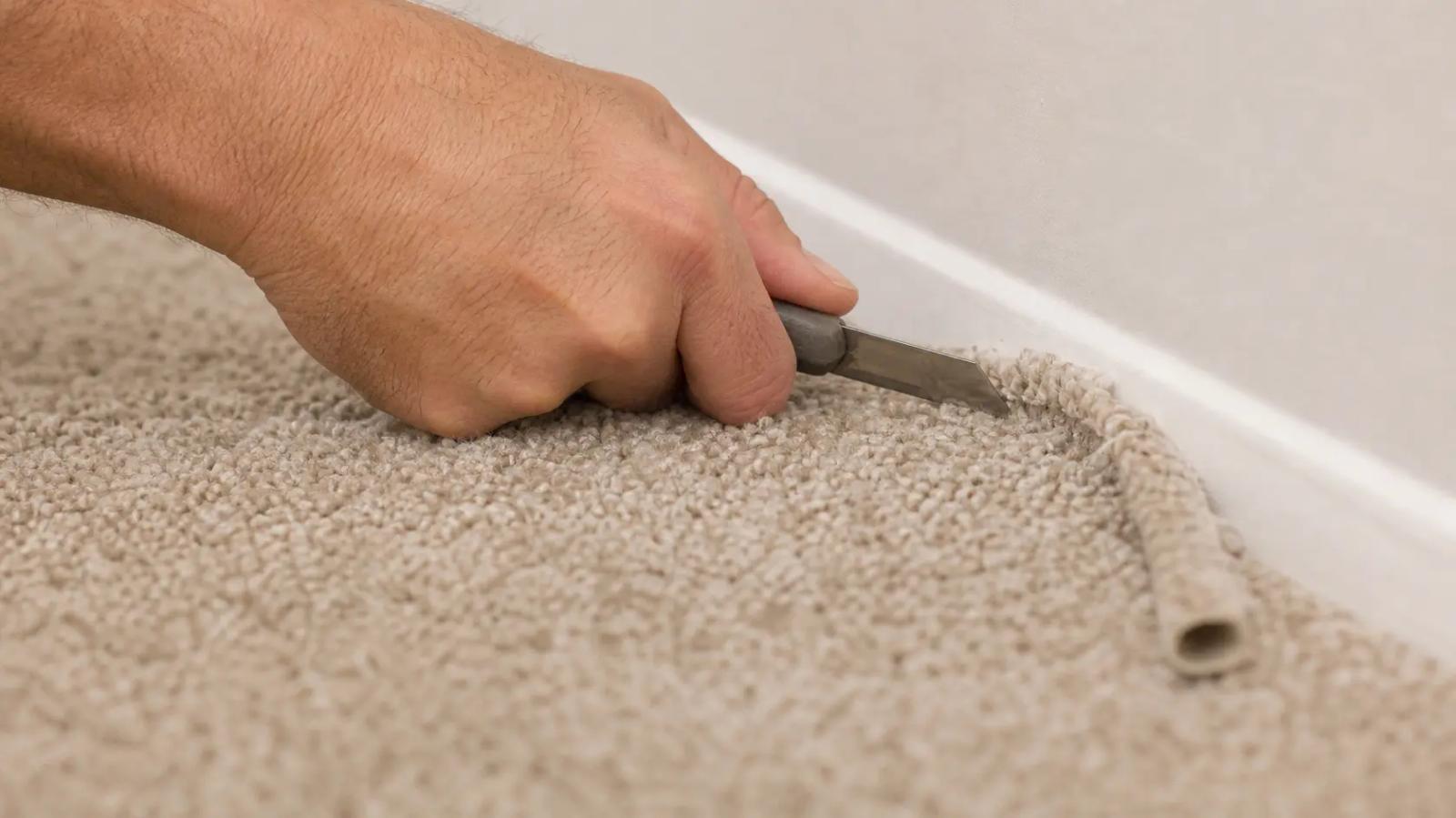
Carpet stretching keeps your existing carpet and fixes how it sits on the floor. The technician releases the carpet from the tack strips along the walls, uses a power stretcher to pull the carpet tight across the whole room, hooks it back into place on the tack strip, and trims the excess. When it's done right, the carpet lies flat against the floor again.
Carpet replacement involves removing the existing carpet and installing new carpet, usually with new pad underneath. Replacement means new material, new labor, and hauling the old carpet away.
The difference that matters most is tension. Unless the manufacturer specifies otherwise, wall-to-wall carpet should be stretched 1 to 1.5 percent. On a 10-foot span, that's 1.2 to 1.8 inches. It doesn't sound like much, but carpet that never got that stretch will eventually buckle, no matter how new it is. Re-stretching puts the missing tension back. Replacement starts over with a carpet that needs that same tension anyway.
So the real question is whether your carpet still has the structure to hold tension.
When Should You Stretch Carpet Instead of Replacing It?
Stretching is worth it when the problem is looseness and nothing else. If you've noticed your carpet developing ripples, waves, or loose areas, but the pile still springs back under your hand and the traffic lanes don't look worn, the carpet itself is probably fine. It just isn't anchored the way it should be.


A few signs point toward stretching. The carpet feels soft and even everywhere except the loose spots. There are no persistent odors coming up from the pad. The problem appeared after a move, a furniture shuffle, or a few seasons of temperature swings rather than slowly across years of wear.
In those cases, professional carpet stretching is the right call. You keep the carpet you already paid for, and the floor lies flat again.
In the harder cases, replacement may be the smarter money.
When Should You Replace Carpet Instead of Stretching It?
Some carpet problems sit below the surface, and stretching can't reach them. If the carpet shows matted, flattened traffic lanes, the fibers have worn out, and pulling the carpet taut will only give you a flat carpet that still looks worn. If the pad underneath is crushed, crumbling, or was soaked during a leak and never dried properly, the carpet has nothing stable to sit on.
According to Angi, most carpet needs replacing somewhere between 5 and 15 years, depending on carpet type, padding quality, and foot traffic. Age alone doesn't mean the carpet needs to be replaced, but old carpet with heavy wear rarely justifies the cost of a stretch. And once the carpet has reached the end of its useful life, no repair options will restore what wear has taken.
Delamination is the gray area most guides skip. It means the bond between the carpet's primary and secondary backings has given way, often from heavy or untreated pet urine, spills or water that weren't dried quickly, misused solvents, or occasionally a defect in the latex. Re-stretching delaminated carpet may improve the appearance, but it doesn't fix the cause. In some cases, the backings can be re-bonded by gluing or injecting new latex between them, which can save a carpet that would otherwise be written off. Whether that works depends on how widespread the damage is, and that's something a certified carpet inspector needs to see in person.
If a buckle has been left for a long time, stretching will flatten it, but a line may stay where the peak was. Vacuuming and cleaning rarely remove it. If those lines run across the room and they bother you, that's a fair reason to lean toward new carpet.
How Do Carpet Stretching and Replacement Compare?


| Carpet stretching | Carpet replacement | ||
|---|---|---|---|
What it fixes | Ripples, buckles, and loose areas in carpet that is otherwise sound | Worn fibers, failed pad, widespread damage, or a style you no longer want | |
What it can't fix | Worn traffic lanes, crushed pad, set-in odors | Nothing about the old carpet, because it's gone | |
Cost | Priced by the square footage of each full room, including connected closets. Ardent's minimum is $300 | $3 to $11 per square foot installed, according to Angi | |
Disruption | Room cleared or furniture moved for you; a doorway seam is often opened and rebuilt | Room fully cleared; old carpet and pad removed and hauled away | |
Your existing carpet | Stays, re-anchored | Replaced |
The cost gap depends on scale. Replacing a 12-by-12 bedroom at Angi's range comes to roughly $430 to $1,580 installed. Run the same math across a 1,000-square-foot main floor and replacing the carpet costs $3,000 to $11,000. Stretching is priced on the same square footage, but with no new carpet, no new pad, and no disposal, which is why the lower cost holds even as the rooms add up.
For a fuller breakdown, see what carpet stretching costs in Sacramento.
Whether a stretch will last depends on why the carpet came loose in the first place.
Why Does Carpet Come Loose, and What If You Wait?
The most common cause is improper installation. A lot of carpet installation work is rushed, and the carpet ends up laid rather than installed: rolled out, seamed, and trimmed to fit without being stretched to standard. On one job shown on Ardent's re-stretching page, the carpet had about 4 to 6 inches of excess slack that had never been stretched out. Installers in a hurry often use a knee kicker for the whole job, but a knee kicker is built for positioning carpet, not for tensioning a room. The Carpet and Rug Institute's installation guidance states that its residential standard requires carpet to be power-stretched to minimize wrinkling and rippling. The carpet that skipped that step will loosen eventually, even if it looked fine on install day.
Carpets that weren't given time to acclimate inside the home before installation can expand and contract as conditions change. Tack strips can lose their grip, especially when they were fastened with the wrong nails for the subfloor. A pad that is too thick or too soft lets the carpet flex until it works loose. Swings in indoor temperature and humidity add stress, particularly in homes where some rooms get cold in winter. Dragging heavy furniture or regular rolling traffic, like an office chair, can push carpet into a bubble. And carpets can loosen due to wear as the backing ages or delaminates.
One cause doesn't need fixing at all. A small share of carpets turn wavy shortly after carpet cleaning, because the materials in the carpet expand and contract at different rates as they get wet and dry. It looks alarming, but nothing is wrong. Once the carpet has fully dried, it relaxes and lies flat. That's the one ripple that goes away on its own.
Every other loose spot tends to get worse. Leaving loose carpet in place keeps tripping hazards in your home, which matters if you have kids, older family members, or anyone carrying a laundry basket down the hall. Stretching eliminates that hazard. Waiting also gives the fold time to set into a permanent line and puts extra wear on the peak every time someone walks across it.
How Long Does Carpet Re-Stretching Last?
Done to standard, a re-stretch should last the life of your carpet, as long as the cause is fixed along with the symptom. Pulling the carpet tight without addressing a loose tack strip or a failing pad just resets the clock. That's why a good carpet stretching service starts by finding out why the carpet failed.

If you've had your carpet stretched before and the looseness came back, treat that as information. Repeat buckling usually points to something underneath that the last job missed, or to a stretch done with a knee kicker instead of power stretching.
Know what normal looks like after a stretch, too. Seam peaking, a slight ridge along a seam, appears on all stretched-in carpet, including brand-new installations. All the tension runs through the secondary backing and the seam tape, so the seam rises a little. It tends to show more on thin looped-pile carpet and less on thicker cut pile. If you never noticed it before, the carpet may simply never have been stretched properly. No seam in a textile is truly invisible, just as the seams on your clothes aren't.
Ardent guarantees its stretching and repair work for at least one year, so if a defect in the work causes the problem to come back, the return visit is on Ardent, not you.
Get a Carpet Inspection in Sacramento Before You Decide
You're about to spend either a few hundred dollars or several thousand, and the most expensive outcome is guessing wrong in either direction. Replace carpet that only needed tension, and you've paid for a floor you didn't need. Stretch carpet that has failed underneath, and you'll be back to deciding between carpet stretching and replacement next year.
An in-home assessment settles it. At Ardent Carpet Restore, Vincent Adams is the technician who inspects your carpet and the one who does the work. He holds IICRC certification as a Practicing Senior Carpet Inspector, Master Textile Cleaner, and Master Fire and Smoke Restorer, along with certification in Carpet Repair and Reinstallation. With 23 years of experience, he's seen both kinds of fold many times and can tell them apart in person. He'll assess your carpet and recommend the option that fits its condition, whether that's a stretch, a professional carpet repair, or replacement, not the one that makes the bigger invoice.
If stretching is the answer, Ardent's professional carpet re-stretching is done to the CRI standard, and any underlying cause found along the way gets fixed so the problem doesn't return. If replacement is the better call, you'll hear that plainly.
See which option your carpet needs with a free in-home assessment, before you spend anything.